Car Seat Position: Too Close or Too Far for Safe Driving?
Adjusting your car seat is about more than finding a comfortable driving position. The distance between the seat, steering wheel, and pedals also affects vehicle control, driver reaction time, and occupant protection in a crash. That is why sitting either too close to or too far from the controls should be avoided.
Sitting too close to the steering wheel can make the pedals easier to reach and improve visibility of the front edge of the hood. However, it also restricts leg and arm movement. During long drives, this position may cause muscle tension, leg fatigue, or numbness because the knees and elbows remain excessively bent.
Another concern is airbag safety. If the driver sits too close to the steering wheel, they may be in a less safe position when the airbag deploys. Sitting too far away is not ideal either. The driver must stretch their arms and legs to reach the controls, potentially reducing their ability to steer or operate the pedals quickly and effectively.
Excessive seat distance can also compromise driving posture and visibility. If the pedals are difficult to reach properly, braking performance may suffer. Overextended arms can limit steering control, while an unsuitable seating position may reduce the effectiveness of the seat belt and airbag system.
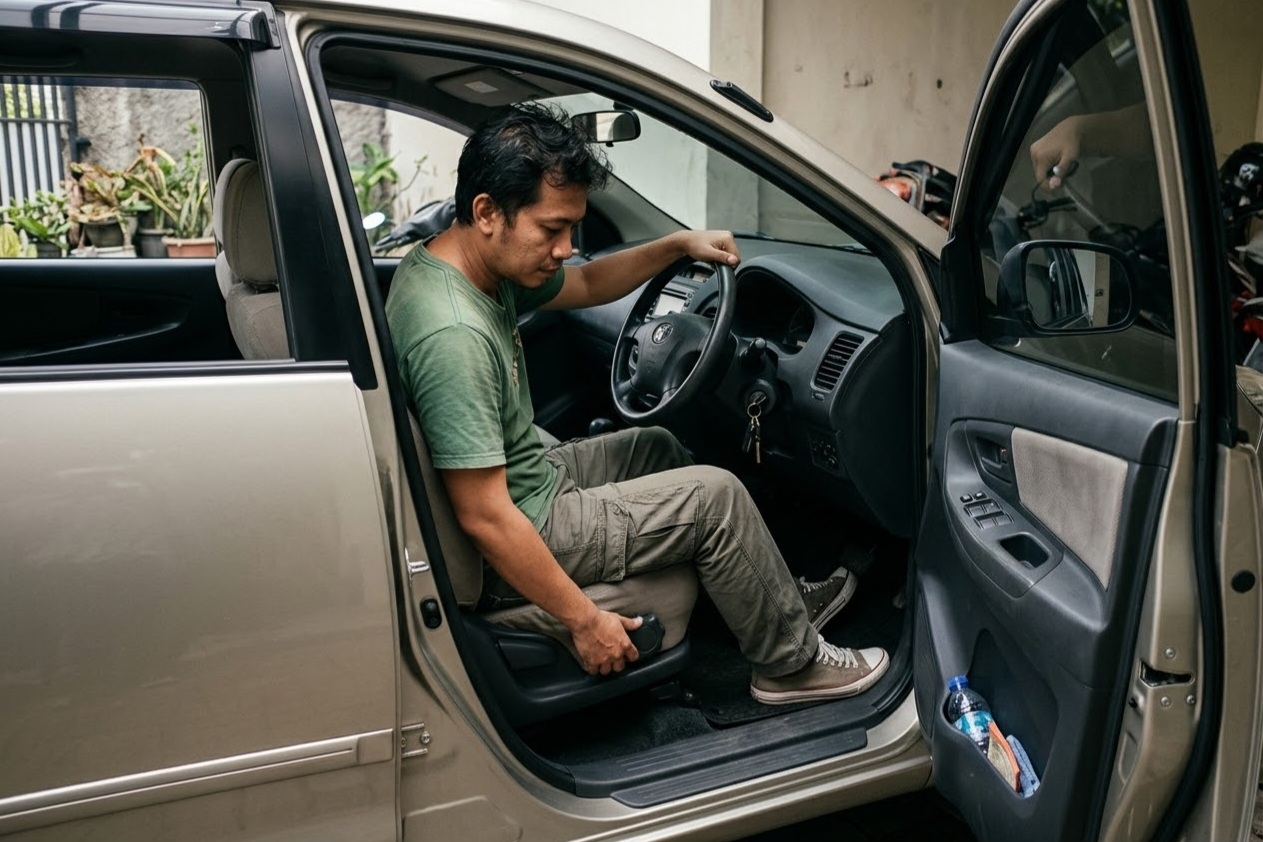
So, how should you find the right position? Adjust the seat forward or backward until you can fully depress the brake pedal without locking your knees or bending them excessively. When holding the steering wheel, keep your elbows slightly bent and your shoulders against the seatback. Pay attention to the distance between your chest and the steering wheel. Around 25–30 cm (10–12 inches) from the center of the steering wheel to your chest is a useful starting point, provided you can still reach all controls comfortably and follow the vehicle manufacturer's guidance.
Next, adjust the seatback so your body remains properly supported without reclining excessively. A relatively upright position helps maintain steering control and a comfortable posture during long journeys. Adjust the head restraint to suit your height, with its center approximately level with the top of your ears. Proper positioning helps reduce the risk of neck injuries, particularly in a rear-end collision.
Finally, always wear your seat belt correctly before driving. The lap belt should sit low across your pelvis rather than your abdomen, while the shoulder belt should cross your chest and shoulder. The ideal driving position is neither the closest nor the farthest setting. It is the position that allows effective vehicle control, maintains a comfortable posture, and helps the vehicle's safety systems protect you as intended.
INDONESIA 🇮🇩
Posisi Jok Mobil Terlalu Dekat atau Jauh, Mana yang Lebih Aman?
Mengatur posisi jok mobil bukan sekadar mencari posisi duduk yang nyaman. Jarak jok terhadap setir dan pedal juga berpengaruh terhadap kendali kendaraan, kecepatan reaksi pengemudi, hingga perlindungan tubuh saat terjadi kecelakaan. Karena itu, posisi jok yang terlalu dekat maupun terlalu jauh sama-sama perlu dihindari.
Jok yang terlalu dekat dengan setir memang memudahkan pengemudi menjangkau pedal dan melihat ujung kap mobil. Namun, ruang gerak tangan dan kaki menjadi lebih terbatas. Jika digunakan dalam perjalanan panjang, posisi ini bisa membuat otot lebih cepat tegang, kaki mudah pegal, bahkan menimbulkan kebas akibat postur yang terlalu menekuk.
Risiko lainnya berkaitan dengan airbag. Jika tubuh berada terlalu dekat dengan setir, pengemudi bisa berada dalam posisi yang kurang aman saat airbag mengembang. Sebaliknya, jok yang terlalu jauh juga bukan solusi ideal. Tangan dan kaki harus bekerja lebih keras untuk menjangkau kontrol kendaraan, sehingga respons saat memutar setir atau menginjak pedal bisa berkurang.
Jarak jok yang terlalu jauh juga berpotensi mengganggu posisi tubuh dan pandangan pengemudi. Kaki yang sulit menjangkau pedal dengan optimal dapat mengurangi kemampuan mengerem secara efektif, sementara tangan yang terlalu lurus membuat pengendalian setir kurang leluasa. Selain itu, posisi duduk yang tidak sesuai dengan sistem keselamatan kendaraan dapat mengurangi efektivitas perlindungan sabuk pengaman dan airbag.
Lantas, bagaimana menentukan posisi jok yang tepat? Mulailah dengan mengatur maju-mundur jok agar pedal rem bisa diinjak penuh tanpa membuat lutut terkunci lurus atau terlalu menekuk. Saat memegang setir, siku sebaiknya tetap sedikit menekuk dan bahu tidak terangkat dari sandaran. Jarak tubuh dari setir juga perlu diperhatikan. Sekitar 25–30 cm dari bagian tengah setir ke dada dapat dijadikan patokan awal, selama pengemudi tetap bisa menjangkau seluruh kontrol dengan baik dan sesuai petunjuk pabrikan kendaraan.
Jangan lupa mengatur sudut sandaran jok agar tubuh tetap tersangga dengan baik tanpa terlalu rebah. Posisi yang relatif tegak membantu pengemudi mempertahankan kendali setir dan menjaga postur selama perjalanan panjang. Headrest atau sandaran kepala juga perlu disesuaikan dengan tinggi kepala, dengan bagian tengahnya berada kurang lebih sejajar dengan bagian atas telinga. Pengaturan ini membantu mengurangi risiko cedera leher, terutama saat terjadi benturan dari belakang.
Terakhir, selalu gunakan sabuk pengaman dengan benar sebelum berkendara. Pastikan sabuk bagian bawah melintang di panggul, bukan perut, sedangkan bagian atas melewati dada dan bahu. Posisi jok yang ideal bukan berarti harus paling dekat atau paling jauh, melainkan posisi yang memungkinkan pengemudi mengendalikan mobil secara optimal, mempertahankan postur yang nyaman, dan tetap mendapatkan perlindungan maksimal dari fitur keselamatan kendaraan.
Share